Biggest Airport in the World and the Busiest Airport for 2026
Air travel continues to evolve at an extraordinary pace. As global passenger numbers surge toward record highs, airports are becoming more than transportation hubs — they are economic engines, smart cities, logistics centres, and gateways connecting continents.
In 2026, two airports dominate global aviation conversations for very different reasons. One holds the title of the biggest airport in the world by land area, while another continues to lead as the busiest airport in the world by passenger traffic.
For airlines, airport operators, logistics providers, and aviation technology companies, these mega-airports reveal where the future of aviation is heading. They showcase the growing importance of operational efficiency, scalable infrastructure, passenger experience, and digital transformation.
In this article, we explore:
The biggest airport in the world in 2026
The busiest airport in the world in 2026
How these airports operate at scale
Emerging aviation trends shaping the future
Why intelligent airport technology matters more than ever
What Is the Biggest Airport in the World in 2026?
The biggest airport in the world by total land area in 2026 is:
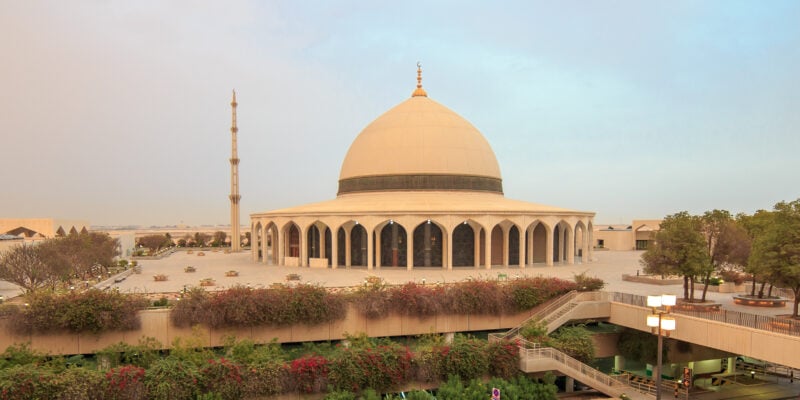
King Fahd International Airport (DMM) — Saudi Arabia
Located in Dammam, Saudi Arabia, King Fahd International Airport remains the world’s largest airport by land size, covering approximately 776 square kilometres (300 square miles).
To put that into perspective:
It is larger than the entire country of Bahrain
It is significantly bigger than most major cities
It dwarfs many of the world’s busiest airports in sheer physical footprint
Despite its enormous size, King Fahd International Airport is not the busiest airport globally. Instead, its massive land allocation reflects long-term strategic planning, cargo operations, military integration, future expansion capacity, and regional economic ambitions.
Why Is King Fahd International Airport So Large?
Many people assume the biggest airport must also be the busiest. However, airport size and passenger traffic are entirely different metrics.
King Fahd International Airport was designed with future scalability in mind. Saudi Arabia has invested heavily in aviation infrastructure as part of its Vision 2030 economic diversification strategy, which aims to transform the Kingdom into a global transport and logistics hub.
The airport includes:
Extensive runway systems
Large cargo handling zones
Aviation support infrastructure
Maintenance facilities
Expansion-ready land
Military and commercial aviation operations
The airport’s size also allows for long-term infrastructure growth without the constraints faced by airports located in dense urban areas.
Other Massive Airports in the World
While King Fahd International Airport holds the number one spot, several other airports rank among the world’s largest by land area.
Denver International Airport (DEN) — USA
Denver International Airport is the largest airport in North America, spanning approximately 135 square kilometres.
Known for its futuristic architecture and extensive runway network, Denver continues to expand rapidly due to growing passenger demand and cargo operations.
King Khalid International Airport (RUH) — Saudi Arabia
Riyadh’s King Khalid International Airport is another enormous aviation hub with significant expansion plans linked to Saudi Arabia’s growing aviation ambitions.
Dallas/Fort Worth International Airport (DFW) — USA
Dallas/Fort Worth remains one of the world’s largest and most operationally complex airports, serving as a critical hub for domestic and international air traffic.
Beijing Daxing International Airport (PKX) — China
Although newer than many airports on this list, Beijing Daxing represents the next generation of mega-airport design with highly efficient passenger flow systems and large-scale automation.
What Is the Busiest Airport in the World in 2026?
The title of the busiest airport in the world in 2026 belongs once again to:
Hartsfield-Jackson Atlanta International Airport (ATL) — USA
According to Airports Council International (ACI) global rankings based on 2025 passenger traffic, Atlanta handled more than 106 million passengers, retaining its long-standing position as the world’s busiest airport.
Atlanta has held this title for 27 out of the last 28 years, demonstrating remarkable operational consistency and network efficiency.
Why Is Atlanta the World’s Busiest Airport?
Atlanta’s dominance is driven by several strategic advantages.
1. Geographic Location
Atlanta sits in a highly advantageous location within the United States. Around 80% of the U.S. population can reach Atlanta within a two-hour flight, making it an ideal connecting hub.
2. Delta Air Lines Hub Operations
Atlanta serves as the primary hub for Delta Air Lines, one of the world’s largest carriers. The airport’s network connectivity enables efficient domestic and international transfers.
3. Operational Efficiency
Despite its immense passenger volumes, Atlanta is widely recognised for efficient aircraft movement and turnaround operations.
4. High Domestic Demand
Unlike airports heavily dependent on international traffic, Atlanta benefits from strong year-round domestic demand across the U.S.
The Top 10 Busiest Airports in the World for 2026
Based on the latest ACI traffic rankings from 2025 data, the world’s busiest airports heading into 2026 include:
Rank
Airport
Country
Annual Passengers
1
Hartsfield-Jackson Atlanta (ATL)
USA
106.3 million
2
Dubai International (DXB)
UAE
95.2 million
3
Tokyo Haneda (HND)
Japan
91.7 million
4
Dallas/Fort Worth (DFW)
USA
85.6 million
5
Shanghai Pudong (PVG)
China
84.9 million
6
Chicago O’Hare (ORD)
USA
84.8 million
7
London Heathrow (LHR)
UK
84.4 million
8
Istanbul Airport (IST)
Turkey
84.4 million
9
Guangzhou Baiyun (CAN)
China
83.5 million
10
Denver International (DEN)
USA
82.4 million
Dubai International Airport: A Global Aviation Powerhouse
Dubai International Airport continues to challenge Atlanta for the top position.
Handling more than 95 million passengers, Dubai remains the world’s busiest international airport.
Dubai’s rise reflects several broader aviation trends:
Growth of Middle Eastern aviation hubs
Increased long-haul international travel
Strategic global connectivity
Premium passenger experiences
Advanced airport technology investments
Dubai’s aviation infrastructure is also preparing for future expansion through the development of Al Maktoum International Airport, which could eventually become the world’s largest aviation hub.
The Rise of Asian Aviation Hubs
One of the biggest trends shaping aviation in 2026 is the rapid growth of Asia-Pacific airports.
Airports such as:
Shanghai Pudong
Tokyo Haneda
Guangzhou Baiyun
Beijing Capital
Singapore Changi
continue to climb global rankings as international travel rebounds and regional economies expand.
China, in particular, has invested aggressively in airport infrastructure and domestic aviation growth, helping several Chinese airports re-enter the global top 10.
The Future of Mega-Airports
As airports become larger and busier, the challenges of managing operations grow exponentially.
Modern mega-airports must handle:
Passenger flow optimisation
Security screening efficiency
Airside operations
Baggage handling
Ground support logistics
Aircraft turnaround coordination
Sustainability initiatives
Data integration across systems
Traditional operational models are no longer sufficient for airports operating at this scale.
This is why aviation technology is becoming central to the future of airport management.
Smart Airports and Digital Transformation
The airports leading global rankings today are increasingly powered by smart technology ecosystems.
Airports are adopting:
Real-time operational visibility
AI-driven analytics
Predictive maintenance
Digital twins
Automated passenger processing
Intelligent airside management
Advanced situational awareness systems
These technologies help reduce delays, improve safety, increase operational efficiency, and enhance passenger experience.
For example, advanced operational intelligence platforms allow airports to monitor and coordinate:
Aircraft positioning
Gate usage
Ground vehicle activity
Turnaround performance
Weather disruptions
Resource allocation
In an environment where every second matters, operational visibility becomes a competitive advantage.
As passenger volumes increase, airports face mounting pressure to reduce environmental impact while continuing to scale operations.
Major airports are investing heavily in:
Sustainable aviation infrastructure
Renewable energy systems
Electric ground support equipment
Carbon reduction strategies
Smarter air traffic management
Efficient taxiing operations
Future airport growth will depend not only on capacity expansion but also on sustainable operational practices.
Why Airport Operations Are Becoming More Complex
Modern airports operate like miniature cities.
A single mega-airport may coordinate:
Hundreds of aircraft movements per hour
Tens of thousands of staff
Multiple airlines
Ground handling teams
Security operations
Customs agencies
Logistics providers
Maintenance crews
Without integrated operational intelligence, inefficiencies can quickly escalate into delays, congestion, and financial losses.
This growing complexity is driving demand for smarter operational platforms that provide a unified, real-time operational picture.
The Role of Data in Modern Aviation
Data is now at the centre of airport decision-making.
The world’s busiest airports increasingly rely on:
Live operational dashboards
Predictive analytics
AI-powered forecasting
Sensor integration
Geospatial intelligence
Collaborative decision-making systems
These technologies enable airports to move from reactive operations to proactive management.
For example, predictive systems can identify potential bottlenecks before they occur, allowing airport teams to intervene early and maintain operational flow.
As global passenger traffic approaches 10 billion annually, data-driven aviation operations are no longer optional — they are essential.
What the World’s Biggest and Busiest Airports Teach Us
The distinction between the biggest airport and the busiest airport highlights two different realities of modern aviation.
The Biggest Airports Prioritise Scale
Airports like King Fahd International focus on:
Long-term expansion potential
Strategic logistics infrastructure
Future economic growth
Regional aviation development
The Busiest Airports Prioritise Efficiency
Airports like Atlanta succeed because of:
Optimised operations
Network connectivity
Efficient passenger processing
High-frequency aircraft movement
Both models reveal the same underlying truth:
The future of aviation depends on intelligent operational management.
Final Thoughts
The world’s airports are entering a new era of growth, complexity, and transformation.
King Fahd International Airport remains the largest airport in the world by area, showcasing the scale of modern aviation infrastructure. Meanwhile, Hartsfield-Jackson Atlanta International Airport continues to dominate as the busiest airport globally, handling more than 106 million passengers annually.
As airports expand and passenger expectations rise, operational efficiency will become increasingly critical. The aviation industry’s future will be shaped not only by infrastructure size but by how intelligently airports manage operations, resources, and real-time data.
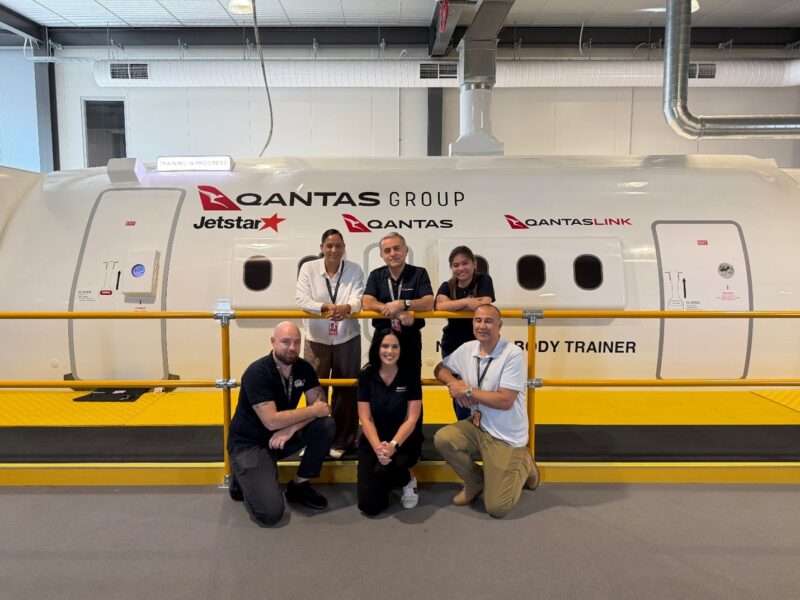
As the aviation industry continues to grow, the need for realistic, high-fidelity crew training has never been greater. From emergency evacuation procedures to cabin service operations, airlines and training centres require reliable systems that accurately replicate real-world aircraft environments.
Spatial helps airlines worldwide deliver safer, more effective cabin crew training through advanced aviation training devices, virtual simulators, and precision-engineered training environments designed for real operational performance.
Brand development, content, digital marketing, sales collateral and wider marketing activity, taking projects from initial concept through to execution.